September 2026Importance of Soil Restoration
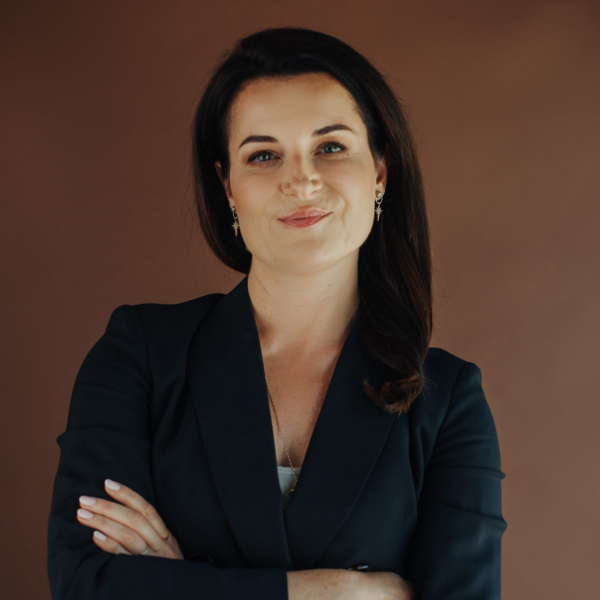
Anna Danylczenko founded the Polish initiative Ground Up - Grunt od Nowa Foundation after recognizing a critical blind spot in agriculture: while discussions often focus on fertilizers, emissions, and yields, the role of soil and watermanagement remains largely overlooked. Today, through Ground Up, she brings together farmers, scientists, and businesses to restore soil health and strengthen agricultural resilience.
Why is soil health becoming such an urgent issue?
'Healthy soil is the foundation of food production, water security, and climate resilience. A soil profile can tell the story of a farm: how it has been managed, where risks are emerging, and what opportunities exist to improve productivity. Yet we often treat soil as an input rather than as a living asset. Declining organic matter levels and soil degradation are reducing agriculture's ability to cope with increasingly extreme weather. Healthy soils act as natural buffers, storing water during wet periods and making it available during droughts. At the same time, they support biodiversity, nutrient cycling, and long-term productivity.'
What is preventing farmers from accelerating the transition?
'The willingness to change is there. The challenge is managing the financial and practical risks that come with changing farming systems. Farmers cannot carry that burden alone.'
'Soil restoration should no longer be seen as solely a farmer's responsibility. Food companies, financial institutions, researchers, and policymakers all benefit from resilient agricultural landscapes. Businesses depend on secure supply chains, while governments and society depend on healthy ecosystems and stable food production.'
How can those different actors work together?
'What is often missing is an organization that connects science, business, and farming practice. Knowledge exists, funding exists, and motivation exists. The challenge is bringing them together around practical solutions.'
'To help bridge this gap, Ground Up launched the Regenerative Farmer Academy and Regenerative Advisor Academy, free online and hybrid educational programs that have already trained thousands of participants in regenerative agriculture and soil restoration.'
What do you envision for the future?
'My vision is simple: soil health should become a standard consideration in every agricultural and investment decision. Once we recognize that healthy soil underpins food security, water management, biodiversity, and climate resilience, restoring it becomes not an environmental choice, but an economic and societal necessity.'
February 2026Water as Strategic Risk
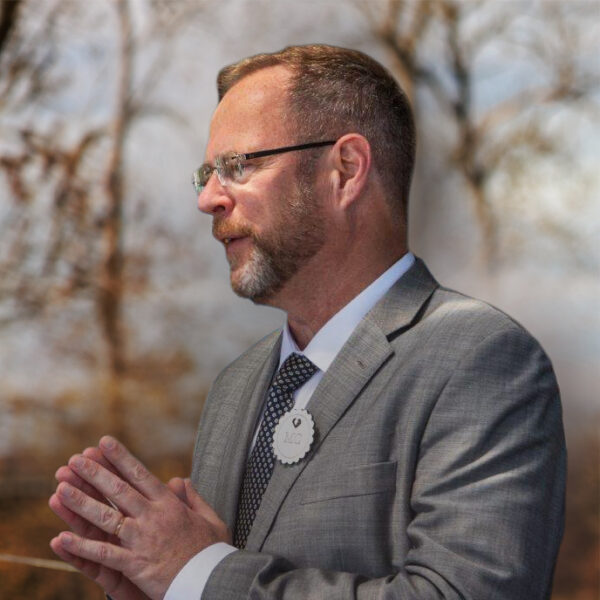
Peter Penning is a global advisor on risk management and business continuity for large multinational companies. Through his company, Ceryle BV, he specializes in water management, water security, circular water use, agriculture, and ecosystem services. With over 30 years of experience, he notes that water is often taken for granted, but in practice we are increasingly confronted with the physical limits of water availability.
What is most underestimated in European agriculture when it comes to water?
‘In Europe, winters bring a lot of precipitation, and the growing season is relatively short. That’s why our systems are primarily designed to drain water rather than retain it, so the land can be worked quickly. But with more extreme seasons - drier summers and wetter winters - this becomes a risk. Farmers need to prepare better for scarcity, which makes water retention increasingly important. They can’t do this alone, because as an individual farm, your influence is limited. Moreover, the costs and consequences of water management can’t be placed solely on the farmer.’
Which structures could help farmers?
‘From the government’s side, it would already help a lot if there were clear frameworks and agreements, so that farmers know what is expected of them in terms of water management. Retaining water can affect yields and the timing of field operations, but it can also lead to savings - for example, by reducing the need for irrigation during dry periods. Financial compensation doesn’t always have to be a grant; it can also be a way to redistribute costs and make water management part of a viable business model.
In addition to government support, large agri-food companies often also have the financial and organizational resources to contribute. For example, they can strategically invest in water storage or water purification within the supply chain and establish agreements among larger groups of farmers.’
How does this affect large agri-food companies?
‘Water increasingly represents a strategic risk, and the survival of companies is directly linked to that of the ecosystem. A long-term vision on water security is therefore essential. Relocating to other sources for raw materials, such as water, is expensive, socially sensitive, and only shifts the problem. By investing in regenerative agriculture, you reduce dependency on external water sources and increase your company’s resilience without costly and difficult alternatives.’
What key role does regenerative agriculture play in this?
‘Regenerative agriculture gives you direct control over effective water management. It increases soil organic matter, maintains living roots in the soil year-round, and builds carbon. Healthy soil acts like a sponge and can store far more water than soil with less life or soil compacted by heavy machinery. The more secure your water supply, the better you can grow food. This makes regenerative agriculture not an ideology, but one of the most powerful tools to make our food system future-proof.’
November 2025Nourishing the Soil, Food, & Mind

Rubén Fernández-Rodríguez is a researcher and metabolic health professor working as part of the Grounded Minds Consortium. Together with his team, he views school meal programs as key platforms to address food insecurity and advance agroecological, planet-friendly nutrition that supports children’s well-being and development.
Can you tell us about your work and background?
'I am proud to be part of the Grounded Minds Consortium, where we develop evidence-based solutions that enhance food systems, reduce ecosystem degradation, and improve mental and brain health.'
'Our work connects the dots between soil, food, the human microbiome, and mental and brainhealth. We face a slow-moving global crisis - poor diet has become a leading cause of chronic illness, diabetes, cancer, cardiovascular disorders, and even common mental disorders such as depression and anxiety. Much of this stems from our industrialised food systems and the loss of diversity in both soil and the human microbiome.'
Could you share an example of how this research is being put into practice?
'For a recently started pilot, we are focusing on children because they are the next generation and represent the foundation of future health. With this early stage pilot we are working with a local school and a regenerative farm called ‘Farm My school’, in the Bellarine Peninsula in Victoria, Australia. Fifteen students ate food grown on their school farm and took part in gardening and cooking. We compared them with students from a similar school without such a program. Early results show that greater soil biodiversity is associated with more diverse and beneficial gut bacteria in children, supporting immune and inflammatory responses.'
'By equipping children with knowledge, access to nutritious food, and sustainable habits, we can nurture healthier generations and reduce the economic burden of disease. Whether in the Mediterranean or in Australia, the message is the same: when we nourish the soil, we nourish our food and therefore our minds.'
October 2025Cross-pollination
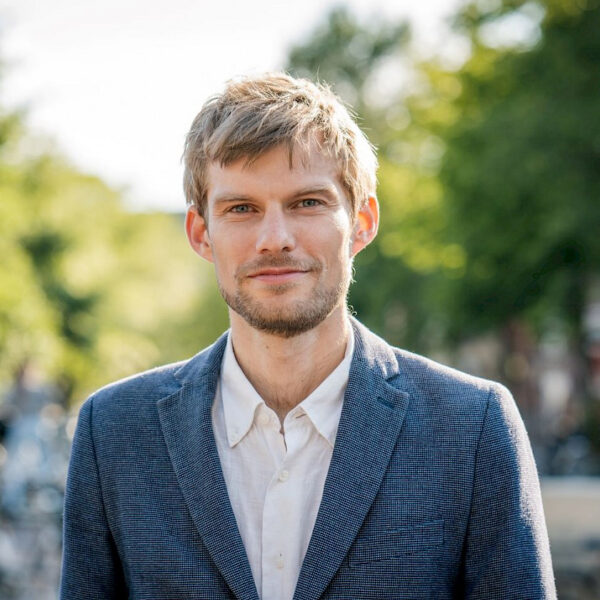
Koen van Seijen is, in addition to his role as Senior Manager at Toniic, also the author and host of the Investing in Regenerative Agriculture podcast.
Through the power of storytelling, Koen aims to shed light on pressing themes and uses his podcast as a tool to connect the dots within a fragmented movement.
Which topics do you see as most important within the agricultural transition?
‘Agriculture touches many areas of society - from education and land ownership to how we shape our landscapes. Health, however, is still underrepresented in this broader conversation. And yet it’s crucial. Health is something people truly care about - it’s tangible and personal. I believe it's a key to getting consumers more engaged with food and farming.’
How do you see the link between food and health?
‘A large portion of today’s Western diseases is preventable or even reversible through proper nutrition. But people often lack awareness of what food really does to the body. It all starts with the soil. Healthy soil leads to healthy food, which supports healthy guts and, in turn, healthy people. In my view, public health is directly connected to soil health. Regenerative agriculture plays a central role in this - and this connection also opens new forms of financing for the sector.’
What does that mean for the way we produce food?
‘The goal of our food system needs to shift. Not: “let’s feed the world with calories,” but: “let’s feed it with quality.” If food is more nutrient-dense, we don’t need to eat as much of it. It requires a different way of thinking about production and consumption.’
You speak about ‘cross-pollination’ between people and initiatives. What do you mean by that?
‘In exploring my own role in this transition, I spoke with hundreds of people. I saw a lot of energy and ideas, but also fragmentation - people working in isolation on their own projects. There’s still limited exchange between initiatives. But it’s exactly this cross-pollination - connecting people and ideas - that’s key to accelerating change. It gives people the right input and inspiration to continue and to collaborate.’
What do you hope to see in the coming years?
‘We need more movement: people willing to take action together. Change doesn’t come from the top down, but from groups of people moving together. That’s where communities like The Regenerative Community can really make a difference.’
September 2025More Health per Hectare
Tjeerd Jongsma | Director of the regional project 'Fascinating': Food Agro Sustainable Circular Nature Technology in Groningen
He believes the future of agriculture will only succeed if we collaborate and place health at the core.
Why do you believe health is the key to sustainable agriculture?
'The transition begins by redefining what we consider valuable. Health is crucial in this, not just human health, but also the health of the soil, the ecosystem, and farmers’ business models. Regeneratively produced crops contain more nutrients, vitamins, and immune-boosting compounds. This connection to public health is still underutilized, even though it can be a huge source of value. Health should not be a by-product, it must be the starting point.'
Where do you see the real leverage for meaningful change?
'Farmers are ready to change, but the market is slow. They largely follow market demand. The key lies in convincing the major cooperatives who shape that demand. If, for example, 5% of farmers of a large cooperative shift to regenerative practices each year, the impact would be significant. That’s why we’re working towards a broad collaboration across the entire chain, now involving around 70 diverse partners, including cooperatives, processors, knowledge institutions, and public organizations.'
How do you make health a shared ambition?
'Fascinating has a four-pillar approach when it comes to the value of health: healthy food, a healthy business model, a healthy living environment, and a healthy agricultural system. From my experience, collaboration is key: we set up the Fascinating program in collaboration with four major cooperatives and the Province of Groningen. The only way to do that is to have a strong, shared vision for the future.'
What do your future plans look like?
'In terms of scale, our ambition is to further expand our regenerative program and grow our community of farmers. And if we set our sights on expanding to the European level, Groningen can serve as a field lab - a place for practical experimentation with farmers on new chain models and a food culture where health takes center stage.'
August 2025Making the System Healthy Again
Hendrik Luth | Farmer
Hendrik Luth is a conventional farmer from the province of Groningen, Netherlands, with a big dream for agriculture. On his farm, he’s experimenting with various ways to make regenerative farming viable.
What do you think is the main problem with the current farming system?
'I think we’re seeing that industrial agriculture has a bunch of very smart solutions – but that those solutions, unfortunately, have had some really nasty side effects. For one, it means economic forces are mainly pushing large, industrial farms to become even larger: the more you have, the more you get – for instance, when subsidies are paid out per hectare. That also means that we have a farming system where smaller farmers that do still have the opportunity to change towards regeneration, will start to disappear in the next 10 years. In a way, we are discovering that the old way of farming – smaller farms, broader crop rotation, less chemical inputs, etc. – had some pretty good reasons for doing it that way. The problem is that we’re slowly but surely losing that knowledge.'
What do you think are the benefits to creating a strong network around regenerative agriculture?
'Right now, we’re seeing a lot of [government] money going to a lot of different projects, and it worries me whether it’s ending up in the right hands. It seems the popular way to change is incrementally: write down a plan that will alter the system 5 or 10%, and people will listen – that’s what is currently popular within government and with big companies. But that means we’re losing motivated, innovative farmers that offer a different approach. We need to create a better understanding on each side – and that only works with a network of a lot of different people and perspectives. Being able to get help for writing a successful grant application, or knowing how to treat your soil, that’s extremely valuable. Because now, on one hand there are really smart, motivated people who don’t have a clue where to start in agriculture, and on the other, there are big companies who only want small changes. If we don’t connect, we won’t truly disrupt the system.'
If you completely had your way, what would a just food system look like, that would allow you to farm in a regenerative and meaningful way?
'Currently, it seems like the only things being promoted are whatever is sweetest, tastiest, most profitable, and least healthy. What we should be looking at, is what types of healthy food we want in our society: what are we actually asking our farmers to grow? That way, you create a sense of responsibility: producers are no longer just responsible for the product, but also have a sense of responsibility towards the land it came from. And farmers, in turn, don’t want to grow unhealthy food: they would be poisoning their neighbors. Ideally, we would give locally grown crops from regenerative farms their own health status. Let government take a stand and prioritize them above other products. It may sound a little wild or forceful, but I think a move like that would honestly be legitimate.'
July 2025The Necessity of Collaboration

Matthijs Smit | Strategic advisor at Het Portaal
Matthijs Smit is a strategic advisor at Het Portaal with expertise in stakeholder management and a strong affinity for the agri-food sector. He explains why collaboration is essential in the transition to regenerative agriculture.
Why do you believe regenerative agriculture is important for the food system?
‘More than anything, I believe regenerative agriculture brings autonomy back to the farmer. It restores their control over the soil, the harvest, and their future and that of the land. Agriculture has become highly dependent on external inputs (often provided by huge corporations), and this has made the system vulnerable. We need to support individual farmers and farmer cooperatives in working with the soil, not against it – in harmony with the crops, not propped up by fertilizers and additives. Regeneration is how you bring that resilience back.’
What are the opportunities and challenges for scaling up in Europe?
‘Currently many initiatives are small-scale. That’s not necessarily bad, because all this experience creates opportunities for bigger impact. But scaling up is essential, and it isn’t easy. It requires collaboration between farmers, researchers, policymakers, and citizens. Only together can we build a network where knowledge, trust, and action come together. The biggest challenge is taking responsibility: who will take the first step?’
What is the role of the 'Regenerative Community' project?
‘From my perspective, there is tremendous value in how regenerative agriculture contributes to society, especially to local and regional stakeholders. It’s not just about farming and climate, but also about health, about regional economies, about transparency, and about labor and employment, for instance. I think our power lies in getting the right people – politicians, businesspeople, researchers, investors – to see those benefits. If we truly want change over the next five to ten years, that community must start growing now. Only together can we build an agricultural system that’s not just sustainable, but genuinely regenerative.’
July 2025Regenerative Retail
Michiel Roodenburg | Co-founder Crisp
Michiel Roodenburg, co-founder of Crisp, is committed in creating a more flavorful world in the broadest sense. With Crisp, he aims to reform the food system by providing customers with products that are produced in harmony with nature and farmers at their core. The best thing is you taste the difference!
We can see products marked as “regenerative” on the Crisp app. Why regenerative?
‘Because we see the current system is failing: biodiversity is declining, soils are being depleted, and even the nutritional value of vegetables is dropping. Regenerative agriculture works with nature, preserves ecosystems, and makes farming future-proof. At Crisp, we are committed to actively contributing to this transition.’
How do you do that as an online supermarket?
'Crisp works directly with farmers and shares the story behind each product. For example, when we offer a "weird-looking" cucumber, we explain that it grew naturally. “Heads up, this cucumber grew naturally! It might have a different shape than you’re used to. As the first supermarket in the Netherlands to promote regenerative produce, we use storytelling to show the benefits, like better taste and a healthier food system. By highlighting both the product and the farmer, we make the customer part of the change.'
How can regional supply chains be scaled?
'It’s important to work through collaboration— if you can share logistics, processing lines, and guaranteed purchasing agreements with other parties, the chain becomes more efficient. This reduces costs and creates economies of scale, benefiting us, farmers, and consumers alike. This also prevents your product supply from becoming too volatile. When you make it easier to collaborate, it’s easier to scale up as well.'
What’s your vision for the future?
'The best thing with regenerative farming is that you can taste the difference! Together, we must invest in building strong regional or local supply chain. That we work more with nature, rather than against it. Where we begin to see each other as partners instead of competitors, because only together can we truly make a difference!'
June 2025Financing the Sustainable Transition